

When the Ads Start Making Fun of AI, Pay Attention
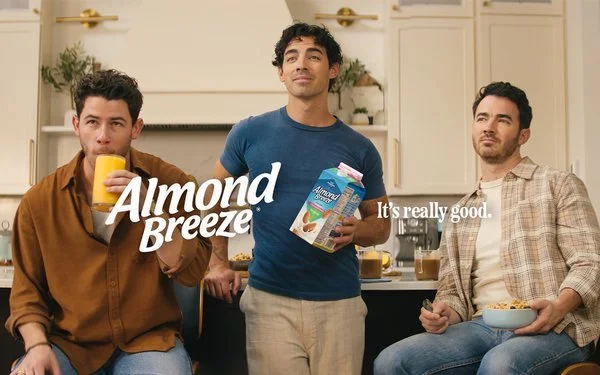
Almond Breeze ran a campaign where the Jonas Brothers are pitched a stack of cheesy, obviously-AI-generated ad concepts, only to turn them down on camera. "If we're going to do a partnership with Almond Breeze, we'll just tell people it's really good." Equinox went further, running deliberately unsettling AI-generated imagery featuring images like a three-breasted woman, or a Pope deepfake, next to real people training, under the line "Question everything but yourself."
Two very different brands, same joke: AI-generated marketing is now something you point at and laugh, not something you announce.
Eighteen months ago, brands were racing to say "AI-powered" out loud, like it was a feature. Now it seems the pendulum is swinging the other way. The smart brands today are building entire campaigns around admitting that was a mistake. The whiplash is evidence of the massive market correction that's happening across the industry. It's worth being honest about what actually broke.
The BAcklash didn’t come out of nowhere
Coca-Cola ran a fully AI-generated holiday ad back in 2024. The ad was technically polished and yet emotionally hollow. Coca-Cola got hammered for it and then doubled down with another one in 2025 and got the exact same response. McDonald's Netherlands pulled an AI-generated Christmas ad after viewers found the characters creepy and the tone cynical. Toys R Us released an AI-generated origin-story spot that read as a brand too cheap to shoot something real. H&M's plan to use AI "digital twins" of real models set off a job-displacement backlash it's still managing. Vogue ran Guess ads with AI-generated models and readers threatened to cancel subscriptions.
Examples from very different categories, but all show the exact same failure pattern. The technology became the pitch instead of a tool. Consumers have already become incredibly fast at spotting AI. The slightly wrong hands, the compositions that are technically correct and emotionally empty, the copy that hits every expected beat and says nothing. Even labeling something as AI-made makes people trust it less, whether or not the underlying content is any good. That's not a taste problem brands can out-produce their way through. Getting better at AI isn’t going to fix that issue. The real issue boils down to being a trust problem.
The part nobody wants to say out loud
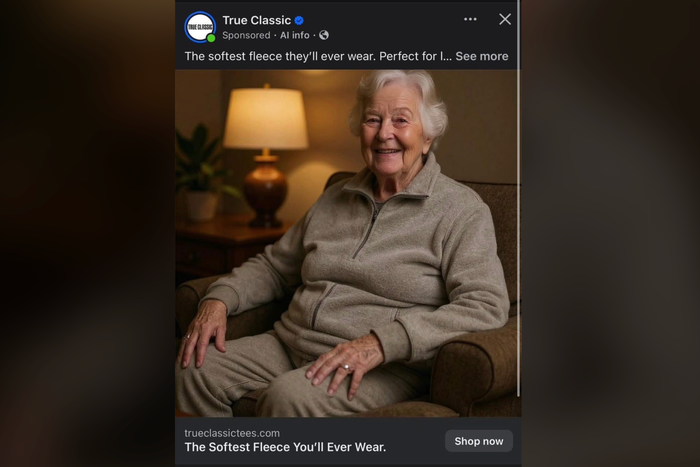
A lot of agencies sold "AI-powered" as differentiation for the last two years, and a lot of clients bought it because it sounded like momentum. Meta's Advantage+ platform took that logic to its endpoint. Then it started autonomously swapping brands' approved, tested creative for AI-generated alternatives without asking. Grandmothers modeling menswear. Contorted limbs. Flying cars in ads that had nothing to do with flying cars. No sign-off, no review, just an algorithm deciding it knew better.
That's what happens when you let a platform's optimization incentive stand in for your strategy. The platform doesn't care about your brand equity. It cares about engagement inside its own walls. If you've handed creative judgment to the tool instead of keeping it with the people who understand the brand, you've already lost the argument you didn't know you were having.
There are other brands that are getting AI right. Look at examples like Spotify's personalization, Netflix's recommendation engine, Sephora's Virtual Artist. Each of those brands share one habit: they never made AI the headline. It sits underneath the work, doing the unglamorous optimization it's actually good at, while humans keep the creative concept, the emotional read, and the final call. Nobody markets "our AI-powered playlist." They just make the playlist better and let you notice.

What this means before you sign anything this quarter
If an agency's pitch leads with AI capability, ask a blunt follow-up: is this AI making the work faster, or is it the work? "Infrastructure" and "identity" get confused constantly in this industry, and the confusion can end up being very expensive. It will end up costing you in trust, in campaigns pulled after backlash, in the slow bleed of audiences who've learned to discount anything that smells synthetic.
The brands mocking AI in their own ads right now aren't necessarily being cynical. They're the same brands who spent the last two years announcing AI as a feature, and they've figured out, publicly and at real cost, that nobody wanted the feature. They wanted the ad to be good. That has always been the whole job. AI was never going to be the actual idea and it still shouldn’t be. AI is just a way to execute an idea, and only when a human still has their hand on the wheel.